Menu data is the closest thing this industry has to a leading indicator. Prices tell you what happened last quarter. Menus tell you what head office thinks will happen next.
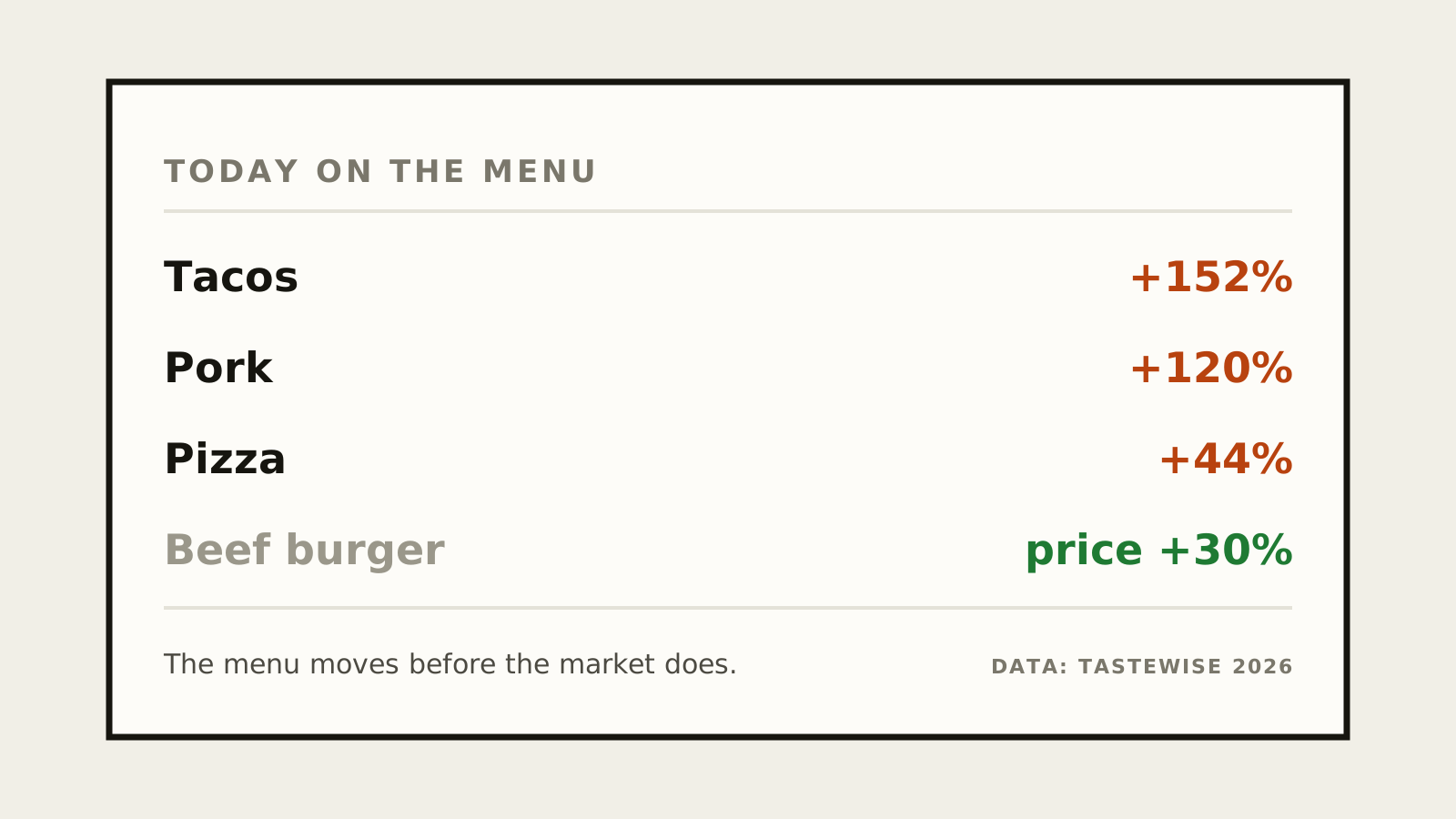
The numbers for 2026 are unusually loud. Tacos are the fastest-growing format in South African fast food, up 152% year on year. Pork is up 120%. Pizza, already everywhere, still managed 44%. Bagels are up 841%, off a base small enough that the percentage flatters them, but the direction is real. Across the board, the QSR sector is projected to grow at 8.4% a year through 2029. (Source: Tastewise, 2026.)
Three things the growth list has in common
They are cheaper proteins wearing better clothes. The taco and pork numbers are not a culinary awakening. Beef inflation peaked near 30% after the foot-and-mouth outbreak, and menus responded the way menus always do: they found formats that carry flavour without carrying beef. A taco is a portion-control device that customers experience as a treat.
They are assembly, not cooking. Tacos, bagels and loaded formats are built from components a semi-skilled shift can assemble consistently. In a market where staffing is the function operators name as their hardest, menu items that survive a Friday night with a new team member have an advantage that has nothing to do with taste.
They arrive late and cheap. Gochujang has been on overseas menus for roughly eighteen months. It is only now appearing in South African limited-time offers. The lag is the opportunity: the international signal is free, public, and about a year and a half ahead of the local launch.
What this means for an operator
If you run a franchise, you mostly cannot act on this directly. Your menu is set by your franchisor, and that is the deal. But the data is still worth reading for three reasons.
First, it tells you what your franchisor should be doing, and gives you the language to ask at the next council meeting. "Our category grew 8.4% and our menu did not move" is a better question than a complaint.
Second, limited-time offers are where most networks experiment, and LTO performance is where an engaged operator has real influence. Volunteering your store as a test site is one of the few levers a franchisee has over the menu.
Third, if you are still choosing a brand, growth-format exposure belongs in your due diligence. A network with no answer to the chicken and assembly-format shift is asking you to fund its beef exposure for the next ten years.
What we are watching next
The high-protein wave is the one to watch through Q4: it has the same shape the taco numbers had twelve months ago, and it suits exactly the assembly logic above. We track menu movement as it lands in the Brief, and the category-level buyer interest that follows it in the Buyer Interest Index.
Menu growth figures: Tastewise, 2026. Beef inflation: Eighty20, 2026.